Your nervous system has limits. When work pressure, financial stress, family demands, and information overload pile up, your body responds with shallow breathing, racing thoughts, and physical tension. Overwhelm is a biological state, not a character flaw.
The best crystals for feeling overwhelmed offer a tactile anchor during these moments. The weight of a stone in your palm, the cool surface against your skin, and the focused intention of holding one shifts your attention from spiralling thoughts to present-moment sensation. Some crystals also contain trace minerals with documented effects on mood and cognition, which adds another layer to their traditional use.
Why the Best Crystals for Feeling Overwhelmed Work on Your Nervous System
Below are six of the best crystals for feeling overwhelmed, with strong reputations for grounding, calm, and nervous system support, along with the geological reasons behind each one.
Black Obsidian: Your Volcanic Anchor
Black obsidian forms when felsic lava cools so rapidly the atoms have no time to organise into crystal structures. The result is volcanic glass, amorphous and dense, with silica content above 70 percent. Trace amounts of magnetite and hematite produce the deep black colour.
Holding obsidian feels heavy. The weight is the point. Density signals safety to your body, similar to how a weighted blanket calms the parasympathetic nervous system. When your thoughts race, the physical heft of obsidian gives your attention something solid to anchor on.
Practitioners use black obsidian to absorb chaotic energy and pull awareness back into the body. Place a piece on your solar plexus during savasana or hold one in each hand during anxious moments. Pair obsidian with three slow exhales, longer than your inhales, to engage the vagus nerve.
Obsidian carries historical significance across African archaeology. Prehistoric communities in East Africa traded obsidian blades over hundreds of kilometres, valuing the stone for both practical and ritual use. Working with obsidian connects you to a lineage of humans who recognised the stabilising presence of volcanic glass.
Amethyst: The Iron-Tinted Quiet
Amethyst is a purple variety of quartz with the chemical formula SiO2. The violet colour comes from iron impurities (Fe3+ and Fe4+) combined with natural gamma irradiation deep underground. Stronger iron content and longer radiation exposure produce deeper purple.
Amethyst earned its name from the ancient Greek word for “not drunken” because Greeks believed the stone protected against intoxication and poor judgement. Modern crystal practitioners reach for amethyst when overthinking takes over. Crystal practitioners associate amethyst with the crown chakra and mental clarity.
Place amethyst on your bedside table to support sleep. Keep a tumbled piece in your pocket during high-stakes meetings. Hold a cluster while journaling to slow your thoughts.
South Africa produces some of the finest amethyst on the continent, with significant deposits in the Magaliesberg region and the Northern Cape. African amethyst often shows deeper saturation than Brazilian material because of higher iron concentration in the host rock.
Hematite: Iron for Your Foundation
Hematite is iron oxide, Fe2O3, with metallic lustre and surprising weight. The name comes from the Greek word for blood because powdered hematite produces a deep red streak. Iron is the same mineral your blood relies on to transport oxygen, giving this stone a direct connection to your physiology.
Hematite grounds in a way few other stones match. The high iron content gives each piece noticeable density. Placing hematite on your lower back, holding pieces in both hands while seated, or wearing a hematite bracelet during stressful days creates a felt sense of being weighted to the earth.
Iron deficiency is one of the most common nutritional issues globally, and low iron correlates with fatigue, brain fog, and difficulty regulating emotion. While holding hematite does not replace dietary iron, the symbolic and energetic association reinforces your body’s need for this essential element.
The Northern Cape of South Africa hosts world-class hematite deposits, particularly in the Sishen iron ore belt. Working with locally-sourced hematite connects your practice to African geological heritage.
Tiger’s Eye: Stability with Movement
Tiger’s eye forms through a pseudomorphic process where silica replaces fibrous crocidolite (a form of riebeckite asbestos) atom by atom while preserving the original fibrous structure. Iron oxides infill the spaces, producing the golden, silky chatoyancy famous in this stone.
The geology matters here. Tiger’s eye is one of the few stones where you observe two minerals collaborating across geological time, with the original blue asbestos transformed into golden quartz over millions of years. Working with tiger’s eye honours patience and transformation.
Crystal practitioners associate tiger’s eye with the solar plexus chakra, which governs personal will and decision-making. When overwhelm makes you feel scattered or indecisive, hold a polished piece and ask one specific question. The stone supports clear thinking under pressure.
The Northern Cape of South Africa, particularly the Asbestos Mountains near Prieska, produces some of the highest-quality tiger’s eye on earth. Hawk’s eye (the unoxidised blue variant) and pietersite (a stormy variant) come from the same geological formations.
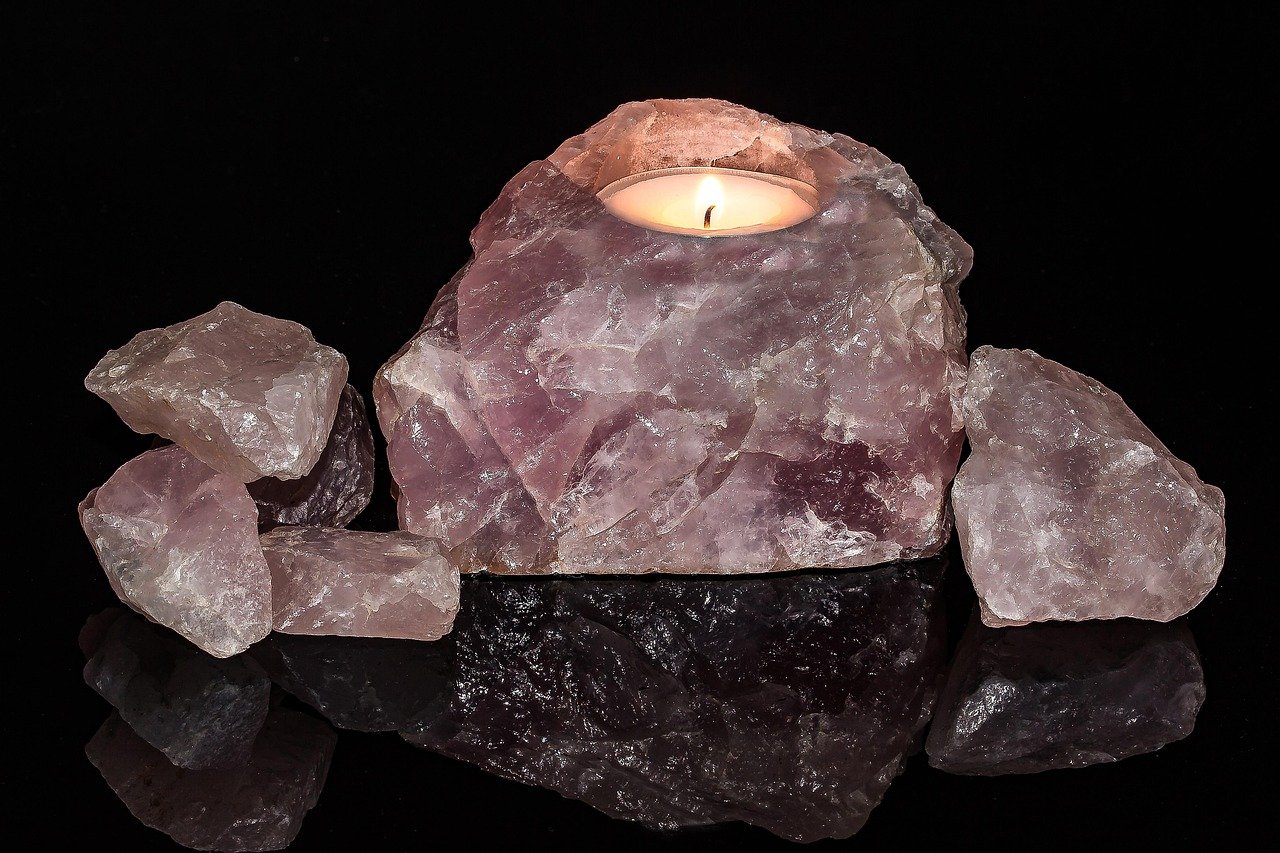
Rose Quartz: The Self-Compassion Stone
Rose quartz is SiO2 with trace amounts of titanium, iron, manganese, or microscopic dumortierite inclusions, depending on the source. The pink colour ranges from pale blush to deep magenta based on these trace elements.
Overwhelm often comes wrapped in self-criticism. You feel anxious, then judge yourself for feeling anxious, then spiral further. Rose quartz interrupts the loop by drawing attention to softness and self-compassion.
Hold rose quartz over your heart during difficult conversations with yourself. Place a piece by your bathroom mirror as a visual reminder of gentleness. Sleep with rose quartz under your pillow to soften reactive emotional patterns.
Madagascar produces the most famous rose quartz globally, but Mozambique and Namibia also yield excellent material. The proximity of these deposits to South Africa makes rose quartz one of the more accessible African-sourced stones for grounding work.
Lepidolite: Nature’s Lithium
Lepidolite is the standout from a geochemical perspective. The mineral contains lithium, the same element used in psychiatric medication for mood regulation. Chemical formula: K(Li,Al)3(Al,Si,Rb)4O10(F,OH)2.
Doctors have prescribed lithium carbonate since the 1940s for bipolar disorder, treatment-resistant depression, and severe anxiety. Therapeutic lithium works by modulating neurotransmitter activity, particularly serotonin and dopamine, and by protecting neurons from excitotoxic damage. Researchers have correlated trace lithium in drinking water with lower suicide rates in epidemiological studies across multiple countries.
Lepidolite contains between 1.39 and 3.6 percent lithium by weight, depending on the deposit. You absorb negligible amounts through skin contact, so working with lepidolite does not substitute for prescribed medication. The connection between the mineral and the medicine grounds the stone’s traditional use in measurable chemistry.
Lepidolite supports calming the nervous system, eases transitions, and promotes sleep. The mica structure gives lepidolite a soft, layered appearance, with pearlescent purple flecks across each piece. Place lepidolite under your pillow for restless nights, hold a piece during panic, or keep one on your desk during high-pressure work weeks.
Major lepidolite deposits exist in Brazil, Madagascar, and Zimbabwe. Zimbabwean material is particularly significant for African practitioners seeking continental sourcing.
How to Use the Best Crystals for Feeling Overwhelmed in Daily Practice
Choose one stone based on your current state.
If your thoughts spiral and your body feels frantic, reach for black obsidian or hematite. The weight gives your nervous system a physical reference point.
If you struggle to sleep or quiet mental chatter, work with amethyst or lepidolite. The lithium in lepidolite shows documented mood-regulating properties at therapeutic doses, and practitioners have used amethyst to calm mental chatter for thousands of years.
If you feel scattered and indecisive, hold tiger’s eye. The stone supports focus without forcing you into rigid thinking.
If self-criticism dominates your overwhelm, work with rose quartz. The stone redirects your attention toward gentleness.
A simple practice: hold your chosen stone in your dominant hand. Close your eyes. Take five slow breaths, making your exhale longer than your inhale. Name three sensations you feel in your body, three sounds you hear, and three textures against your skin. The stone serves as the anchor for this sensory return.
Building a Toolkit with the Best Crystals for Feeling Overwhelmed
You do not need every stone. A focused practice with two or three carefully chosen pieces produces better results than a drawer full of crystals you never touch.
For a starter grounding kit, consider three pieces. One piece of black obsidian or hematite handles physical grounding through density. One piece of lepidolite or amethyst handles mental and emotional calming, with lepidolite offering the geochemical edge through trace lithium content. One piece of rose quartz handles self-compassion during difficult emotional states.
Cleanse your stones regularly. Pass them through sage smoke, place them on selenite, or rinse them under cool water (avoid water with hematite, since prolonged exposure causes oxidation). Set a clear intention for each stone before use.
A Note on Crystals and Mental Health
Crystals support nervous system regulation through tactile presence, ritual, and intention. Stones do not replace therapy, medication, or medical care. If overwhelm persists, escalates into panic attacks, or interferes with daily functioning, speak to a qualified mental health professional.
The geochemistry of stones like lepidolite reminds you minerals and your biology have always been connected. Iron in hematite, silica in quartz, lithium in lepidolite. Your body has used these elements for as long as humans have existed.
Working with the best crystals for feeling overwhelmed during nervous system flare-ups is not magical thinking. The practice combines tactile grounding, ritual focus, mineral symbolism, and in some cases trace geochemistry into a sensory return-to-body experience. Pair your stones with breath work, movement, hydration, and proper rest.
Your nervous system responds to consistency. Choose your stones, build a short daily practice, and return to them when overwhelm rises.
Leave a Reply