
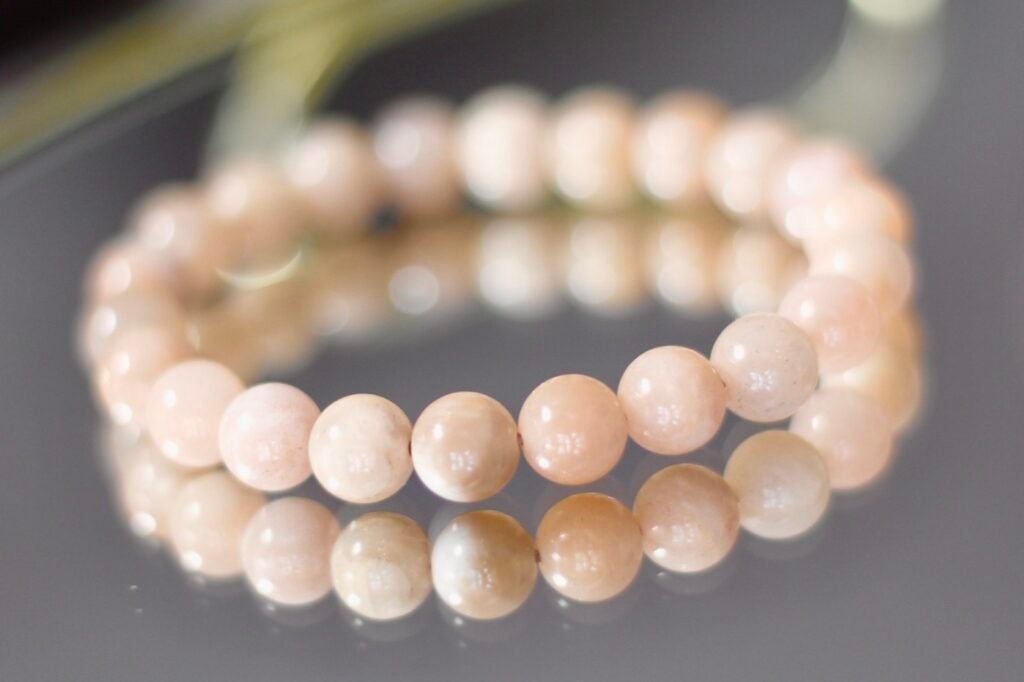
Moonstone is one of three official birthstones for June, alongside pearl and alexandrite. Pearl is the traditional choice. Moonstone and alexandrite are the modern additions. If you were born in June, you have three stones to choose from, which is rare. Only August and December offer the same flexibility.
Most birthstone guides written for African readers borrow their entire framework from European and Indian sources. This post does something different. It places moonstone within the broader African relationship to stone, moon, and ancestral memory, alongside the global birthstone tradition you might already know.
Moonstone as a June Birthstone
Moonstone joined the June birthstone list as a more accessible alternative to pearl. For centuries, pearls were available only to the wealthy and royal. Moonstone gave June births a stone they could afford and own.
The American Gem Society and Gemological Institute of America both recognise moonstone as one of June’s three official birthstones. South African jewellers follow this list, but the symbolic frame has always been imported. The deeper question for African readers is not what June means in a Roman calendar. It is what the moon, the feminine cycle, and the feldspar family of minerals mean within African cosmology.
The African Relationship to Stone
African geological heritage is older than almost anywhere else on earth. The Kaapvaal Craton in Southern Africa is over three billion years old. The minerals that emerge from this land carry a memory longer than human history.
Across African traditions, stone is not decorative. It is a record. Igneous and metamorphic rocks, the family moonstone belongs to, form under heat and pressure deep within the earth. Sangomas, izinyanga, and traditional healers across the continent have used stones in divination, protection, and healing for centuries. The use of imithi (medicine) often pairs plants with mineral and stone work.
Moonstone, as a feldspar, comes from the same geological family that builds much of the African continent’s foundation. When you hold a moonstone, you are holding a relative of the rock beneath your feet.
The Moon in African Cosmology
The moon holds a central place across African spiritual systems.
In Zulu tradition, the moon is associated with iNyanga, which gives the word for the traditional herbalist who works with cycles, timing, and ancestral guidance. Many ceremonies, especially those connected to ancestral communication, are timed to specific moon phases.
In Yoruba cosmology, the moon connects to Yemoja and other feminine orisa associated with water, fertility, and the rhythms of life.
In ancient Egyptian tradition, Khonsu and later Isis carried lunar associations, and the moon was woven into healing, fertility, and protection practices.
Across the continent, the moon governs planting calendars, menstrual rhythms, ritual timing, and the relationship between the living and the ancestors. Moonstone, as a stone that physically reflects and refracts light the way the moon does, sits naturally within this framework.
When you wear moonstone, you are not borrowing meaning from Roman or Greek mythology. You are reconnecting to a relationship with the moon that your own ancestors already knew.
The Origin of the Name
Roman natural historian Pliny the Elder named the stone in the first century. He believed moonstone changed appearance with the phases of the moon. Modern gemology calls this optical effect adularescence.
The name is European. The phenomenon is universal. Stones that hold and reflect moonlight have been recognised across African traditions long before they were catalogued in Western mineralogy.
Cultural Associations Across Traditions
Roman and Greek mythology linked moonstone to Diana, Selene, and Artemis, lunar goddesses of their pantheons. Hindu mythology describes moonstone as solidified moonbeams.
In African contexts, moonstone fits the broader category of stones used to support feminine cycles, ancestral connection, and dream work. Among Southern African traditional practitioners, white and pale stones are often used in cleansing rituals tied to lunar timing. Moonstone slots naturally into this practice for those who want to work with crystals alongside their ancestral traditions.
The stone does not replace traditional practice. It complements it.
Zodiac and Cycle Associations
Moonstone connects to two zodiac signs in Western astrology. Cancer, ruled by the moon, is the strongest match. Gemini, through its June birth month overlap, also claims moonstone.
Beyond the Western zodiac, moonstone aligns with anyone whose work or life follows a cyclical rhythm. Women tracking their menstrual cycles, farmers working with planting moons, mothers in postpartum recovery, and practitioners working with ancestral timing all have natural reasons to work with moonstone.
If your sun sign is Cancer or Gemini, moonstone fits your astrological profile. If you live by African traditional time rather than Western astrology, moonstone still fits because the moon is central to both.
Anniversary Associations
Moonstone is the gemstone gift for the 13th wedding anniversary in modern Western tradition. It also marks every 13th year after that.
In African contexts, anniversary tradition matters less than the meaning of the stone itself. Moonstone is given to mark transitions: a daughter coming of age, a woman entering motherhood, a couple starting a new home, a person stepping into a new spiritual phase. The stone honours change rather than counting years.
Chakra and Body Associations
Modern crystal practice connects moonstone to the sacral chakra and the third eye chakra. Both centres relate to intuition, emotional clarity, and reproductive energy.
The chakra system originates in Indian tradition. African body wisdom carries its own map. In Zulu and Xhosa healing practice, the umbilical centre, the heart, and the crown of the head are recognised as sites of ancestral and emotional connection. Moonstone, placed on the lower abdomen during rest, supports the same emotional and reproductive territory whether you describe it through chakras or through African body wisdom.
Use the framework that fits your practice. The stone does not require one tradition over another to do its work.
Colour Varieties and What They Mean
Moonstone comes in several colours, and each carries different associations.
Blue moonstone, the rarest, supports clarity and emotional balance.
White moonstone is the most common and represents new beginnings and lunar work.
Peach moonstone carries warm, heart centred energy and supports self acceptance.
Green moonstone bridges heart and body, grounding emotional clarity in physical wellbeing.
Grey moonstone connects to shadow work and unseen knowledge.
Rainbow moonstone, technically a form of labradorite, shows multiple flashes of colour and supports protection and intuition.
Practical Uses for Peach Moonstone
Peach moonstone is one of the most versatile varieties for daily wear and practical ritual work.
Use it during anxiety. Hold a peach moonstone in your palm during moments of overwhelm or social anxiety. The stone is traditionally used to calm an overactive nervous system and ease the body back into rest. Pair it with imphepho smoke for a deeper grounding ritual rooted in Southern African tradition.
Use it for self acceptance work. Place peach moonstone on your sacral or heart area during meditation when you are working through self criticism, body image struggles, or perfectionism. Many Black women carry inherited tension around their bodies, hair, and skin. Peach moonstone supports the slow work of softening that inheritance.
Use it during hormonal shifts. Use peach moonstone during PMS, perimenopause, or postpartum recovery. Wear it as a pendant close to the chest or carry it in your pocket through the day.
Use it for new mothers. Peach moonstone is a traditional gift for new mothers. Pair it with the cultural practice of confinement after birth, where the new mother and baby rest indoors for the first weeks, to support emotional regulation during this protected time.
Use it before social events. Hold a peach moonstone before walking into a difficult room: a job interview, a family gathering, a community meeting. It is associated with quiet confidence rather than loud assertion.
Browse the HAT peach moonstone here: https://ozyn.co.za/shop/peach-moonstone
Practical Uses for Green Moonstone
Green moonstone is rarer than peach or white and carries a slightly different working energy. It bridges the heart and the body.
Use it for emotional grounding. Green moonstone suits people who feel emotionally scattered. Hold it in your non dominant hand during meditation to settle racing thoughts into the body. This pairs well with the Ubuntu principle of being grounded in relationship rather than isolated in your own head.
Use it for heart healing. Place green moonstone on the heart area during rest or sleep when working through grief, breakup recovery, or estranged family relationships. Many African families carry generational silence around grief. Green moonstone supports the slow surfacing of feelings that have been held back for too long.
Use it during boundary work. Green moonstone supports the ability to feel emotion clearly while staying grounded enough to make decisions. Use it during therapy sessions, lobola negotiations, hard family conversations, or moments where you need to stay present without dissociating.
Use it for plant and earth connection. Green moonstone pairs naturally with garden work, herb practice, and time spent outdoors. Carry it during walks, place it among your imphepho or impepho plants, or rest it in the soil of your indigenous herbs.
Use it for intuitive eating and body trust. Green moonstone supports reconnection with hunger cues, fullness, and the body’s wisdom. African food culture has always been seasonal, communal, and rhythmic. Green moonstone supports a return to that rhythm in a world that has tried to discipline the African body away from its own knowing.
Browse the HAT green moonstone here: https://ozyn.co.za/shop/green-moonstone
Who Should Wear Moonstone
Moonstone suits more than just June births. Consider it if you are:
Born under Cancer or Gemini, regardless of your birth month.
Drawn to feminine energy work, lunar cycles, or moon ritual practice.
Working through emotional release, hormonal shifts, or new beginnings.
Walking a path that bridges modern life and ancestral practice.
Looking for a stone that honours both Western birthstone tradition and African cosmology.
The stone does not need to match your birth month for the meaning to apply. Many African crystal users choose stones based on what their body, ancestors, or current season call for, rather than a birth date.
Practical Notes for Wearing Moonstone
Moonstone ranks 6 to 6.5 on the Mohs hardness scale. This is softer than quartz, which means it scratches more easily and chips under impact. Wear moonstone rings with care. Pendants and earrings hold up better for daily use.
Clean moonstone with warm water and mild soap. Avoid ultrasonic cleaners and harsh chemicals. Store it separately from harder stones to prevent surface scratches.
Cleanse your moonstone under moonlight, particularly during a full moon. You can also cleanse it with imphepho smoke, the traditional Southern African cleansing herb. Both methods honour the stone’s lunar nature.
Choosing Your Moonstone
Three things matter when you choose a moonstone for yourself or as a birthstone gift.
The glow comes first. A strong adularescence is what gives moonstone its character. Tilt the stone in light and watch how the sheen moves across the surface.
The colour comes second. Decide whether you want the cool blue flash, the warm peach tone, the everyday white, the heart centred green, or the multicoloured rainbow effect.
The setting comes third. Match the stone to how it will be worn.
Moonstone offers something the other June birthstones do not. It carries the moon’s rhythm in a form you can wear on your skin. For African readers, it also offers a chance to bridge the global birthstone tradition with the older relationship your own ancestors held with stone, moon, and the cycles of feminine life.
Hold the stone. Listen to it. Let it remember you.