
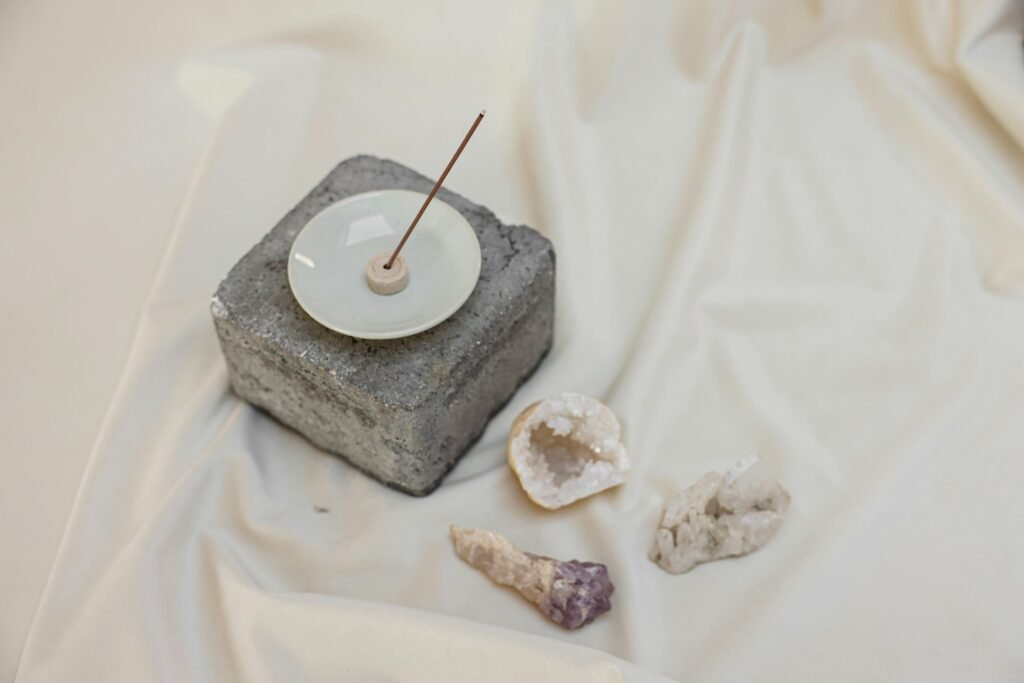
Most incense holder guides skip the part you need most. They tell you about materials and aesthetics, then leave you to figure out why your stick keeps falling over, why your cone scattered ash across your altar cloth, or why your resin cracked the cute ceramic dish you bought.
The wrong holder ruins the burn. Ash spills. Smoke dies early. Your space smells faint instead of full.
This guide matches each incense type to the holder it needs. Use it before you buy your next piece. You can browse the HAT incense and burner collection here: https://shop.ozyn.co.za/products/Incense-c197424765
Why the Holder Matters More Than You Think
Incense Cones: Deep Dish and Backflow Holders
Each form of incense burns differently. Sticks drop ash along their length. Cones burn downward and pool heat at the base. Coils unwind in spirals over hours. Resin needs charcoal hot enough to melt sap. Loose herbs like imphepho and sage burn fast and need containment.
A holder built for one form fails the others. A flat ceramic dish handles a cone fine but lets a stick wobble. A wooden tray holds a stick beautifully and chars under a charcoal disc. Match the holder to the form first, then think about how it looks on your altar.
Incense Sticks: Boat Holders and Vertical Stands
Sticks are the most common incense form in South Africa. They burn from the tip down and shed ash as they go.
You need a holder with a small hole or groove that grips the bamboo core upright, plus a long tray underneath to catch ash along the full length of the burn. Boat or coffin style holders do both jobs well. They run the length of the stick, keep it angled correctly, and contain ash in one channel.
Vertical stands work for shorter ritual sticks where presentation matters. Avoid short trays for full length sticks. Ash will scatter past the edge.
Materials to look for: ceramic with a thick glaze, brass with a wooden ash base, soapstone, dense hardwood. Avoid thin softwood for daily use because heat discolours the surface over time.
Cones burn from the tip inward and concentrate heat at the base. They produce a stronger, shorter scent burst than sticks.
Standard cones need a flat, heat resistant dish with a slight indent in the centre to seat the cone and catch the small mound of ash left behind. Brass and soapstone outperform ceramic here because they handle the focused base heat without cracking. If you use ceramic, choose one with a deep well rather than a flat plate.
Backflow cones are different. They have a hollow channel down the middle that channels smoke downward in a visual cascade. They only work on a backflow burner with a matching hole and sealed base. A regular cone holder will not produce the waterfall effect. Drafts also disrupt backflow, so place the burner away from open windows.
Incense Coils: Elevated Stands and Wide Trays
Coils burn for hours, sometimes up to twelve. They unwind as they burn, which means the holder needs to support the coil without the spiral touching its own ash.
You want an elevated stand, often with a small hook or pin in the centre to suspend the coil above a wide catch tray. Metal coil holders handle the sustained heat best. Brass, copper, and cast iron work well for long burns.
Coils suit larger rooms and outdoor patios. The wide ash trail needs space, and the smoke output is too heavy for tight rooms.
Resin: Charcoal Censers and Heat Resistant Bowls
Resins like frankincense, myrrh, and copal do not burn on their own. You burn them on a hot charcoal disc, and the resin melts and releases scent through smoke.
This requires the most heat tolerant holder of any incense form. Use a brass or cast iron censer with a deep bowl and ideally a lid or vented cover. If you use ceramic or stone, fill the base with a layer of sand or ash first to insulate the holder from the charcoal disc. Thin ceramic without sand will crack.
A proper resin setup needs three things: the censer itself, charcoal tongs to handle the disc safely, and natural bamboo charcoal rather than quick light discs. Quick light charcoal contains saltpeter and burns the resin scent.
Soapstone braziers are excellent for slow, even resin burns and hold heat longer than metal.
Palo Santo: Abalone Shells and Heat Safe Trays
Palo Santo burns differently from regular incense. You light the wood, blow it out, and let it smoulder. It does not stay lit on its own and needs to be relit several times during a session.
Use a flat heat resistant tray with high sides. Abalone shells are traditional in South American cleansing practice and pair well with Palo Santo. A small ceramic dish with a flat base also works. The key is a wide flat surface where you can rest the smouldering stick between holds and a non flammable surface underneath because embers fall.
Avoid stick holders with narrow holes. Palo Santo bundles are too thick to seat in them.
Sage and Imphepho Bundles: Abalone Shells and Clay Bowls
Sage smudge bundles and imphepho, the Zulu and Xhosa cleansing herb, burn the same way as Palo Santo. You light the bundle, blow out the flame, and let it smoulder while you walk it through your space.
You need a shell or bowl with high sides to catch falling embers, a flat base wide enough to rest the bundle between uses, and a heat tolerant material that handles direct contact with smouldering plant matter. Abalone shells are common but small. For thicker imphepho bundles, a clay or stone bowl with a four to six inch diameter works better.
Many South African altars use ochre fired clay bowls for imphepho. They handle the heat, hold ancestral significance, and contain ash and embers safely.
Loose Herbs and Powders: Sand Filled Bowls
If you burn loose herbs, powdered incense, or smaller imphepho leaves, you need a different setup. Fill a heat resistant bowl with a layer of sand or fine ash. Light a charcoal disc on top, then sprinkle the herb or powder onto the hot coal.
Brass bowls and clay pots both work. The sand layer protects the bowl base from cracking and lets you press the charcoal flat for even heat.
Shop the HAT incense range, including holders matched to each of these forms: https://shop.ozyn.co.za/products/Incense-c197424765
Material Quick Reference
Brass: best for resin, cones, and coils. High heat tolerance. Easy to clean.
Soapstone: best for resin and slow burns. Dense thermal mass. Naturally grounding feel.
Ceramic: best for sticks and standard cones. Avoid thin glazes for resin or backflow.
Cast iron: best for resin and outdoor coils. Heavy and stable.
Wood: best for sticks only. Never use under cones or charcoal without a heat shield.
Abalone shell: best for Palo Santo, sage, and small herb bundles. Not for charcoal.
Clay or stone bowl: best for imphepho, loose herbs, and ancestral practice.
Safety Rules That Apply to Every Holder
Place every holder on a heat resistant surface, never directly on wood, fabric, or paper.
Keep at least 30cm of space around the holder during a burn. Drafts carry embers further than you expect.
Empty ash only after the holder has cooled fully. Hot ash on a fabric surface starts fires.
Never leave a burn unattended in a room with pets or children. Cats knock holders over, and a fallen stick on carpet leaves a scorch mark within seconds.
Clean ceramic and metal holders with a damp cloth between burns. Resin residue hardens fast and is hard to remove once cured.
How to Decide for Your Space
Ask three questions before you buy.
What incense do you burn most often? Buy the holder for that form first. A second holder for occasional use can come later.
How big is the room? Sticks suit bedrooms and meditation corners. Cones suit small spaces because of the strong scent burst. Coils and resin suit living rooms and outdoor patios.
How often do you burn? Daily users need durable materials like brass, soapstone, or thick ceramic. Occasional users can use lighter wood or thin ceramic without wearing them out.
The right holder turns a daily ritual into something steady and safe. The wrong one creates mess, frustration, and fire risk. Match the form first. Style follows function.
Browse the full HAT incense and burner collection here: https://shop.ozyn.co.za/products/Incense-c197424765